Globale Inhalte: Verständnis der Zonengesetze und -vorschriften weltweit
Lernziele der Lektion:
- Understand how zoning laws work around the world and how they shape land use, building types, Und urban development. You’ll explore examples from cities like New York, Singapur, Und Melbourne to see how zoning impacts real estate projects.
- Learn how to obtain permits and pass inspections across different global regions. You’ll gain insight into the application process, safety requirements, and how to meet environmental and building code standards in countries like Kanada, Dubai, Und Japan.
- Discover key challenges in zoning, including regional differences Und restrictions in historical or environmentally sensitive areas, like London oder Kyoto. You’ll learn how to plan ahead and reduce risks in these situations.
- Explore best practices for managing global zoning laws, such as working with local professionals, understanding local building codes, Und keeping up with regulatory changes to stay compliant and improve project success.
A. Understanding Zoning Laws and Regulations Globally
Understanding Zoning Laws and Regulations Globally
Zoning laws define how land can be used and developed, and these regulations vary significantly across the world. Understanding local zoning laws is crucial for investors to ensure compliance and avoid legal issues.
- Vereinigte Staaten: Im U.S., zoning laws are managed at the municipal level, with areas designated for residential, commercial, industrial, or mixed-use purposes. In cities like New York Und Los Angeles, zoning regulations may also dictate building heights, parking requirements, and green space allocation.
- Singapur: In Singapur, zoning regulations are part of the Master Plan, which designates specific areas for residential, commercial, and industrial use. The government tightly controls land use to ensure sustainable urban development, and any deviation from the Master Plan requires approval from the Urban Redevelopment Authority (URA).
- Australien: In Australien, zoning laws are controlled by local governments. Cities like Sydney Und Melbourne have strict zoning regulations that dictate land use, building heights, and density. Investors must work with local councils to ensure compliance with zoning restrictions.
Challenges in Understanding Zoning Globally
- Regional Differences: Zoning laws differ widely between countries and even within cities. Investors must understand the specific zoning requirements in the area they are targeting.
- Environmental and Historical Protections: In global cities with historical or environmental protections, such as Kyoto oder London, zoning laws may restrict the types of developments allowed in certain areas.
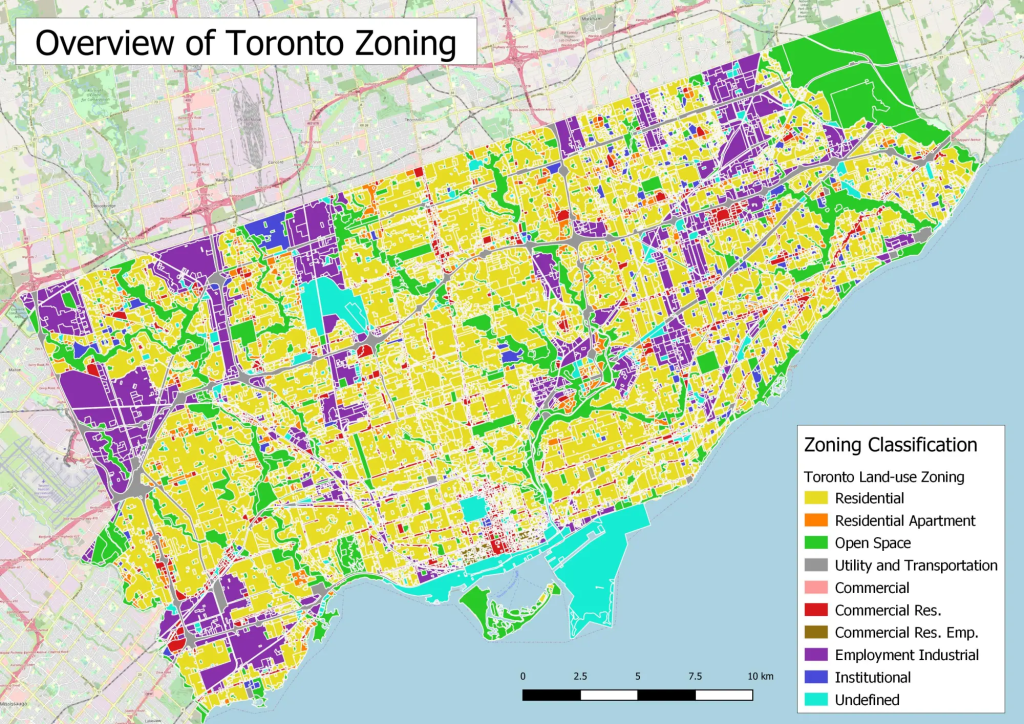
Figur: Vielfalt im Bebauungsplan von Toronto
Beschreibung:
Die Abbildung veranschaulicht die Zoneneinteilung Torontos, kategorisiert nach verschiedenen Nutzungsarten. Diese umfassen Wohngebiete, Wohnungen, Freiflächen, Versorgungs- und Verkehrsflächen, Gewerbegebiete, gemischt genutzte Wohngebiete, Industriegebiete, institutionelle Gebiete und nicht definierte Zonen. Die Karte verdeutlicht die Verteilung dieser Zonen in Toronto und gibt Aufschluss über die Stadtplanung und Entwicklungsmuster der Stadt.
Die zentralen Thesen:
- Vielfältige Zoneneinteilung: Die Zonenvorschriften Torontos zeigen eine Mischung aus Wohn-, Gewerbe-, Industrie- und Freiflächen und spiegeln damit die facettenreiche Stadtlandschaft wider.
- Bereiche mit hoher Diversität: Regionen wie die Beaches und East York zeichnen sich durch eine vielfältige Mischung an Zoneneinteilungen aus, darunter Wohngebiete, Industriegebiete, Grünflächen und Gewerbegebiete.
- Gebiete mit geringer Diversität: Bestimmte Teile Torontos, insbesondere westlich der Yonge Street und südlich der Allen Road, sind überwiegend durch Wohnbebauung mit geringer Dichte gekennzeichnet, was auf eine geringere Vielfalt der Bebauungspläne hindeutet.
- Bedeutung von Einkaufszentren: Regionale Einkaufszentren wie Sherway Gardens, Yorkdale und Scarborough Town Center sind aufgrund ihrer Mischung aus Gewerbe-, Wohn- und Industriegebieten in Verbindung mit Verkehrsnetzen Knotenpunkte mit vielfältiger Zoneneinteilung.
Anwendung der Informationen:
Das Verständnis der vielfältigen Zoneneinteilung Torontos ist für Stadtplaner, Projektentwickler und politische Entscheidungsträger von entscheidender Bedeutung. Es bietet Einblicke in die Wachstumsmuster der Stadt, den Infrastrukturbedarf und potenzielle Entwicklungs- oder Sanierungsgebiete. Für Investoren und Unternehmen kann dieses Wissen als Grundlage für Entscheidungen in Bezug auf Immobilieninvestitionen, Geschäftsstandorte und das Verständnis der demografischen und wirtschaftlichen Gegebenheiten bestimmter Zonen dienen.
B. Navigating Permits and Inspections Globally
Navigating Permits and Inspections Globally
Obtaining permits and passing inspections are essential steps in real estate development globally. Different countries have their own regulations and processes for ensuring that developments comply with local laws.
- Vereinigte Staaten: Im U.S., developers must obtain building permits from local authorities before starting construction. In cities like San Francisco oder Chicago, permits are required for new construction, renovations, and changes in land use. Inspectors conduct regular site visits to ensure compliance with building codes and safety standards.
- Kanada: In Kanada, the permit process varies by province and municipality. Cities like Toronto require detailed applications that include site plans, environmental impact assessments, and fire safety compliance before construction can begin.
- Dubai: In Dubai, developers must obtain approvals from the Dubai Municipality and other relevant authorities before starting a project. Regular inspections ensure that construction adheres to local building codes and safety requirements, including fire safety and structural integrity.
Inspection Requirements Globally
- Permit Approvals: Globally, developers must secure various permits before breaking ground on a project. In Japan, for instance, developers must submit detailed site plans and comply with strict earthquake safety regulations before receiving building approval.
- On-Site Inspections: Throughout the construction process, local authorities conduct inspections to ensure that the building complies with safety standards. In Singapur, inspectors check for compliance with building codes, fire safety, and environmental regulations at key stages of construction.
C. Best Practices for Navigating Zoning and Land Use Regulations Globally
Best Practices for Navigating Zoning and Land Use Regulations Globally
Navigating zoning laws and land use regulations requires a thorough understanding of local rules and proactive engagement with authorities.
- Work with Local Professionals: In global markets, partnering with local architects, planners, and legal experts is essential. In Hongkong, for example, navigating zoning regulations requires close coordination with local professionals familiar with government land use plans.
- Understand Local Building Codes: Each country has its own building codes and standards. In cities like New York oder Toronto, developers must ensure that their projects meet specific requirements for fire safety, accessibility, and structural integrity.
- Plan for Environmental and Historical Considerations: In markets like Kyoto oder Rom, zoning regulations may include additional requirements for preserving historical landmarks or protecting natural resources. Investors should factor these considerations into their project timelines and budgets.
- Stay Informed on Regulatory Changes: Zoning laws can change over time, particularly in rapidly developing cities like Dubai oder Shanghai. Staying informed about local zoning and land use changes can help investors capitalize on new opportunities or avoid potential regulatory pitfalls.
Abschluss
Understanding zoning laws and land use regulations is essential for successful real estate investment, both in Europe and globally. By navigating permits and inspections effectively, working with local professionals, and staying informed about zoning changes, investors can ensure compliance and avoid costly delays. These best practices provide a roadmap for managing the legal and regulatory complexities of real estate development in any market.
Wichtige Unterrichtsinformationen:
- Zoning laws determine land use, such as whether an area is for residential, commercial, oder industrial purposes. Countries like the U.S., Singapur, Und Australien have detailed zoning systems, with rules that may also control building height, parking, Und green space.
- Zoning requirements vary widely between countries and cities. In places like London or Kyoto, additional rules apply to preserve historical architecture Und natural areas, limiting what can be built and how it’s designed.
- Understanding local zoning maps helps investors spot diverse land-use areas and growth potential. For example, Toronto’s zoning diversity offers a mix of residential, commercial, and industrial zones, especially near shopping centers and transport hubs.
- Permits are required before construction, and the process can be detailed. In San Francisco oder Toronto, developers must submit site plans, environmental assessments, Und safety documents to get approval.
- Regular inspections during construction ensure that buildings meet local Sicherheit, fire, Und environmental standards. Cities like Singapore and Dubai conduct multiple inspections at different stages to maintain compliance.
Schlusserklärung:
Whether you’re a developer, investor, or planner, understanding zoning and permit processes globally helps you protect your investments, ensure legal compliance, and adapt your strategies to fit local needs. This knowledge is key for avoiding costly mistakes and building responsibly.

 DE
DE  EN
EN  PT
PT  SW
SW  ML
ML  AR
AR  ZH
ZH  ES
ES  EL
EL  ES_ES
ES_ES  FR
FR  HI
HI  IT
IT  JA
JA  KO
KO  PT_PT
PT_PT  PL
PL  LT
LT  UK
UK  KA
KA  DE_AT
DE_AT  NB
NB  NN
NN