Contenuto locale (specifico per l'Europa): parametri e metodi chiave per la valutazione degli investimenti immobiliari in Europa
Obiettivi di apprendimento della lezione:
- Understand Core Investment Metrics: Learn how to use Flusso di cassa, Cap Rate, Ritorno sull'investimento, GRM, E Restituzione in contanti to measure a property’s profitability, efficiency, E investment potential.
- Learn How to Compare Investments: You’ll discover how tools like GRM help compare properties in markets like the U.K., and how metrics like Restituzione in contanti support decision-making in places like Berlino O Parigi.
- Master Cash Flow Analysis in Europe: Understand how to calculate Gross Operating Income, Spese operative, E Reddito operativo netto in European cities, and how to use these to assess whether a property will generate positive returns.
- Apply Metrics to Real-Life Scenarios: You’ll gain the skills to apply these formulas and concepts to evaluate and compare real properties in cities like Lisbona, Barcellona, E Berlino, even when local market conditions vary.
23.1 Key Metrics and Methods for Evaluating Real Estate Investments in Europe
When investing in European real estate, there are specific key metrics to consider for evaluating the profitability of a property. These include:
- Flusso di cassa: Calculated by subtracting all property-related expenses (e.g., maintenance, taxes) from rental income. European countries, like Germania O Francia, may have different rental yields depending on local regulations and market conditions.
- Cap Rate: IL capitalization rate in Europe is widely used to measure the return on a property, considering the local real estate market. For instance, in Germania, investors may find lower cap rates due to higher property prices compared to southern European countries like Spagna O Portogallo.
- Return on Investment (ROI): This metric calculates the total return from the investment, accounting for cash flow, property appreciation, and tax benefits in European countries. Francia E Italia offer tax deductions that can improve ROI for property investors.
Key Methods:
- Gross Rent Multiplier (GRM): Used in many European markets, GRM is calculated as the property price divided by gross rental income. In markets like the U.K., GRM helps compare properties with different price points.
- Restituzione in contanti: This is often used by investors in European cities like Berlino E Parigi to assess the annual return relative to the actual cash invested.
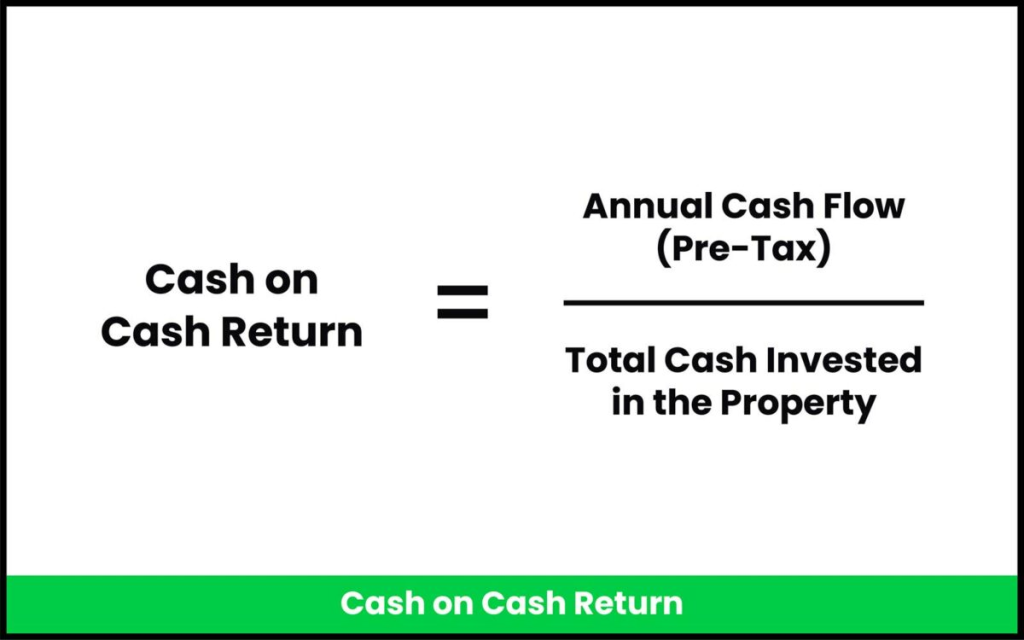
Figura: Formula di restituzione del contante
Descrizione:
L'immagine presenta una formula per calcolare il "rendimento cash on cash" per gli investimenti immobiliari. La formula è illustrata in quanto aiuta gli investitori a determinare il rendimento annuo del denaro investito in un immobile, escludendo gli effetti fiscali.
Punti chiave:
- Flusso di cassa annuale (ante imposte): Rappresenta il reddito annuo generato dalla proprietà prima di considerare le tasse.
- Totale denaro investito nella proprietà: This is the total amount of money the investor has put into the property, including down payments, renovations, and other initial costs.
- Restituzione in contanti: Questa metrica fornisce agli investitori una percentuale che indica il rendimento annuo del loro investimento in contanti.
Applicazione delle informazioni:
The Cash on Cash Return is a crucial metric for real estate investors as it provides a clear picture of the profitability of their investment in relation to the cash they have invested. It allows investors to compare the performance of different properties and helps in making informed investment decisions. By understanding this metric, investors can better gauge the efficiency of their investment and its potential for generating positive cash flow.
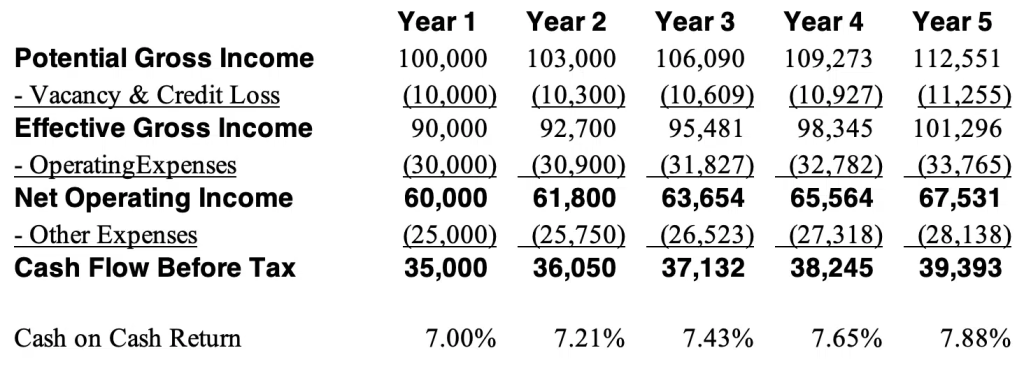
Figura: Calcolo del rendimento in contanti per un investimento di $500.000
Descrizione:
The graph illustrates the step-by-step calculation of the Cash on Cash Return for a real estate investment of $500,000. The process is as follows:
- Reddito lordo potenziale (PGI): Rappresenta il reddito totale che la proprietà potrebbe generare senza considerare eventuali perdite o spese.
- Deduzione per posti vacanti e perdite di credito: Dal PGI vengono sottratte eventuali perdite dovute a unità sfitte o inadempienze creditizie. Questo fornisce un dato di reddito più realistico, tenendo conto di potenziali inoccupazioni o inadempienze nei pagamenti.
- Reddito lordo effettivo (EGI): Dopo aver tenuto conto delle perdite dovute a posti vacanti e crediti, si arriva all'EGI, che è una rappresentazione più accurata del potenziale di reddito dell'immobile.
- Deduzione delle spese operative: Dall'EGI vengono sottratte tutte le spese operative associate alla manutenzione e alla gestione dell'immobile. Queste includono costi come manutenzione, spese di gestione dell'immobile, utenze e altro ancora.
- Reddito operativo netto (NOI): Dopo aver dedotto le spese operative dall'EGI, otteniamo il NOI. Questo rappresenta il reddito generato dall'immobile al netto di tutti i costi operativi, ma prima di qualsiasi finanziamento o spesa in conto capitale.
- Deduzione altre spese: Dal NOI vengono sottratte altre spese, come rate del mutuo, spese in conto capitale o altri obblighi finanziari.
- Flusso di cassa prima delle imposte (CFBT): Dopo aver contabilizzato tutte le spese, otteniamo il CFBT, ovvero l'effettivo afflusso di cassa che un investitore può aspettarsi prima di considerare le tasse.
- Calcolo del rendimento in contanti: Infine, il CFBT viene diviso per l'importo dell'investimento iniziale ($500.000) per calcolare il rendimento cash on cash. Questa metrica fornisce una percentuale che indica il rendimento annuo dell'investimento in contanti.
Punti chiave:
- Il Cash on Cash Return fornisce un quadro chiaro della redditività di un investimento immobiliare in relazione al denaro investito.
- Tiene conto del reddito potenziale, dei costi operativi e di altri obblighi finanziari per fornire una cifra di rendimento realistica.
- Questo parametro è fondamentale per gli investitori per valutare l'efficienza del loro investimento e il suo potenziale di generare flussi di cassa positivi.
Applicazione delle informazioni:
Understanding the Cash on Cash Return is vital for real estate investors. It allows them to assess the performance of their investment, compare different investment opportunities, and make informed decisions. By following the steps outlined in the graph, investors can get a clear picture of the potential returns and risks associated with a property.
23.3 Analyzing Cash Flow in Europe
Introduction: What is Cash Flow?
In Europe, cash flow refers to the net income after all property-related expenses are deducted from rental income. Positive cash flow indicates profitability, while negative cash flow suggests that the property costs more to maintain than it earns.
Metriche e calcoli chiave
- Gross Operating Income (GOI): Total rental income minus vacancy losses in European cities with seasonal fluctuations, like Lisbona O Parigi.
- Spese operative: Include taxes, management fees, and local maintenance costs, which can vary widely across European countries.
- Net Operating Income (NOI): This is the GOI minus operating expenses. The NOI is critical for determining the profitability of a property in cities like Berlino, where property management costs may be higher.
Analisi del flusso di cassa
- Compare Cash Flow to Investment: In mercati come Parigi O Barcellona, where property prices are high, understanding cash flow in relation to the initial investment is crucial.
- Restituzione in contanti: This metric is helpful in European markets where financing terms differ across countries. It helps compare the yield from cash invested.
Informazioni chiave sulla lezione:
- Flusso di cassa is one of the most important metrics for investors. It measures the net income a property generates after all spese are deducted from rental income. A property with positive cash flow earns more than it costs to maintain, while negative cash flow signals a potential loss.
- Cap Rate, or capitalization rate, helps investors estimate the rate of return based on a property’s income and purchase price. In countries like Germania, where property prices are high, cap rates tend to be lower, while places like Spain or Portugal may offer higher returns.
- Return on Investment (ROI) includes cash flow, appreciation, and tax benefits to give a complete picture of the investment’s profitability. Countries such as Francia E Italia provide tax deductions that can increase ROI for real estate investors.
- Gross Rent Multiplier (GRM) is a quick comparison tool used in markets like the U.K.. It divides the property price by gross rental income, allowing investors to evaluate which properties offer more income for the price.
- Restituzione in contanti shows the annual return you earn based on the cash you invested (excluding loans). It’s especially useful in cities like Parigi E Berlino, where financing terms may vary, and helps you compare the efficiency of your investments.
Dichiarazione di chiusura:
Being able to evaluate real estate investments with the right financial metrics gives you a strong advantage as an investor. These tools help you compare opportunities, estimate returns, and reduce risks, especially when investing across different European countries with unique market conditions.

 IT
IT  EN
EN  PT
PT  SW
SW  ML
ML  AR
AR  ZH
ZH  ES
ES  EL
EL  ES_ES
ES_ES  FR
FR  HI
HI  JA
JA  KO
KO  PT_PT
PT_PT  PL
PL  DE
DE  LT
LT  UK
UK  KA
KA  DE_AT
DE_AT  NB
NB  NN
NN