本地(欧洲特有)内容:评估欧洲房地产投资的关键指标和方法
课程学习目标:
- Understand Core Investment Metrics学习如何使用 现金周转, 资本化率, 投资回报率, GRM, 和 现金回报率 to measure a property’s profitability, efficiency, 和 investment potential.
- Learn How to Compare Investments: You’ll discover how tools like GRM help compare properties in markets like the 英国., and how metrics like 现金回报率 support decision-making in places like 柏林 或者 巴黎.
- Master Cash Flow Analysis in Europe: Understand how to calculate Gross Operating Income, 营业费用, 和 净营业收入 in European cities, and how to use these to assess whether a property will generate positive returns.
- Apply Metrics to Real-Life Scenarios: You’ll gain the skills to apply these formulas and concepts to evaluate and compare real properties in cities like Lisbon, 巴塞罗那, 和 柏林, even when local market conditions vary.
23.1 Key Metrics and Methods for Evaluating Real Estate Investments in Europe
When investing in European real estate, there are specific key metrics to consider for evaluating the profitability of a property. These include:
- 现金周转: Calculated by subtracting all property-related expenses (e.g., maintenance, taxes) from rental income. European countries, like 德国 或者 法国, may have different rental yields depending on local regulations and market conditions.
- 资本化率: 这 资本化率 in Europe is widely used to measure the return on a property, considering the local real estate market. For instance, in 德国, investors may find lower cap rates due to higher property prices compared to southern European countries like 西班牙 或者 Portugal.
- 投资回报率(ROI): This metric calculates the total return from the investment, accounting for cash flow, property appreciation, and tax benefits in European countries. 法国 和 意大利 offer tax deductions that can improve ROI for property investors.
关键方法:
- 总租金乘数(GRM): Used in many European markets, GRM is calculated as the property price divided by gross rental income. In markets like 英国., GRM helps compare properties with different price points.
- 现金回报率: This is often used by investors in European cities like 柏林 和 巴黎 to assess the annual return relative to the actual cash invested.
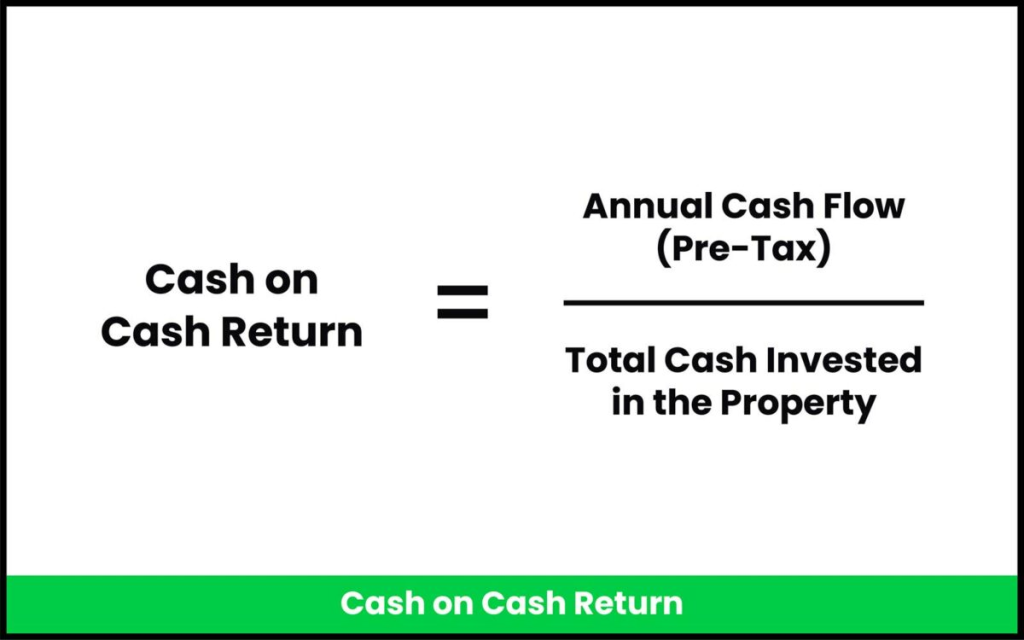
数字: 现金回报率公式
描述:
图中展示了一个用于计算房地产投资“现金回报率”的公式。该公式旨在帮助投资者确定其投资于房产的现金的年度回报率,不考虑税收的影响。.
要点:
- 年度现金流(税前): 这代表该房产在扣除税款前每年产生的收入。.
- 投入该房产的总现金: This is the total amount of money the investor has put into the property, including down payments, renovations, and other initial costs.
- 现金回报率: 该指标为投资者提供了一个百分比,表明其现金投资的年回报率。.
信息应用:
The Cash on Cash Return is a crucial metric for real estate investors as it provides a clear picture of the profitability of their investment in relation to the cash they have invested. It allows investors to compare the performance of different properties and helps in making informed investment decisions. By understanding this metric, investors can better gauge the efficiency of their investment and its potential for generating positive cash flow.
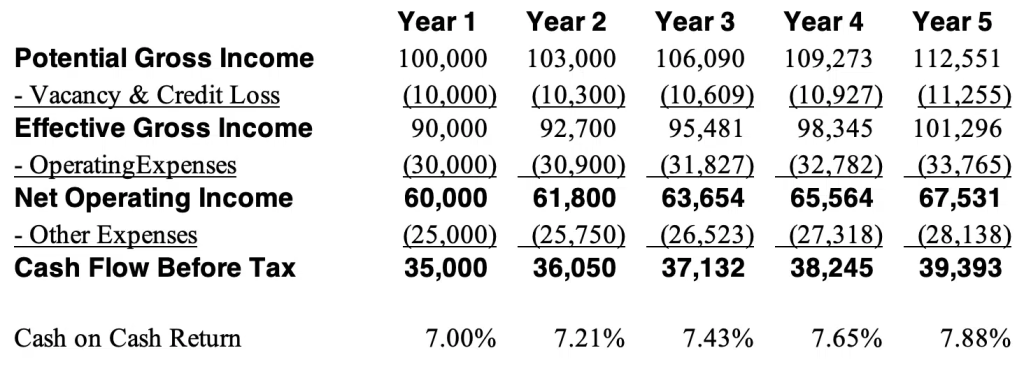
数字: 计算$500,000投资的现金回报率
描述:
The graph illustrates the step-by-step calculation of the Cash on Cash Return for a real estate investment of $500,000. The process is as follows:
- 潜在总收入(PGI): 这代表该房产在不考虑任何损失或支出的情况下可能产生的总收入。.
- 空置率和信用损失扣除: 从物业总收入(PGI)中扣除因空置单元或信用违约造成的损失。这样可以得出更真实的收入数据,考虑到潜在的空置或付款违约情况。.
- 实际总收入(EGI): 扣除空置率和信贷损失后,我们得出 EGI,它能更准确地反映房产的收入潜力。.
- 运营费用扣除: 从总收益(EGI)中扣除所有与物业维护和运营相关的费用,包括维护费、物业管理费、水电费等。.
- 净营业收入(NOI): 从总收益(EGI)中扣除运营费用后,即可得到净营业收入(NOI)。NOI 代表扣除所有运营成本后、扣除任何融资或资本支出前,该物业产生的收入。.
- 其他费用扣除: 从净营业收入中减去其他费用,例如抵押贷款支付、资本支出或任何其他财务义务。.
- 税前现金流(CFBT): 扣除所有费用后,我们得到税前现金流 (CFBT),这是投资者在考虑税收之前可以预期获得的实际现金流入。.
- 现金回报率计算: 最后,将现金流余额除以初始投资额($500,000),即可计算出现金回报率。该指标以百分比形式表示现金投资的年回报率。.
要点:
- 现金回报率清晰地反映了房地产投资相对于所投资现金的盈利能力。.
- 它考虑了潜在收入、运营成本和其他财务义务,从而得出实际的回报数字。.
- 对于投资者而言,该指标至关重要,可以用来衡量其投资的效率及其产生正现金流的潜力。.
信息应用:
Understanding the Cash on Cash Return is vital for real estate investors. It allows them to assess the performance of their investment, compare different investment opportunities, and make informed decisions. By following the steps outlined in the graph, investors can get a clear picture of the potential returns and risks associated with a property.
23.3 Analyzing Cash Flow in Europe
引言:什么是现金流?
In Europe, cash flow refers to the net income after all property-related expenses are deducted from rental income. Positive cash flow indicates profitability, while negative cash flow suggests that the property costs more to maintain than it earns.
关键指标和计算
- 营业总收入(GOI): Total rental income minus vacancy losses in European cities with seasonal fluctuations, like Lisbon 或者 巴黎.
- 营业费用: Include taxes, management fees, and local maintenance costs, which can vary widely across European countries.
- 净营业收入(NOI): This is the GOI minus operating expenses. The NOI is critical for determining the profitability of a property in cities like 柏林, where property management costs may be higher.
现金流分析
- 比较现金流与投资: In markets like 巴黎 或者 巴塞罗那, where property prices are high, understanding cash flow in relation to the initial investment is crucial.
- 现金回报率: This metric is helpful in European markets where financing terms differ across countries. It helps compare the yield from cash invested.
主要课程信息:
- 现金周转 is one of the most important metrics for investors. It measures the 净利 a property generates after all 开支 are deducted from rental income. A property with 正现金流 earns more than it costs to maintain, while negative cash flow signals a potential loss.
- 资本化率, or capitalization rate, helps investors estimate the rate of return based on a property’s income and purchase price. In countries like 德国, where property prices are high, cap rates tend to be lower, while places like Spain or Portugal may offer higher returns.
- 投资回报率(ROI) 包括 cash flow, appreciation, and tax benefits to give a complete picture of the investment’s profitability. Countries such as 法国 和 意大利 provide tax deductions that can increase ROI for real estate investors.
- 总租金乘数(GRM) is a quick comparison tool used in markets like the 英国.. It divides the property price by gross rental income, allowing investors to evaluate which properties offer more income for the price.
- 现金回报率 shows the annual return you earn based on the cash you invested (excluding loans). It’s especially useful in cities like 巴黎 和 柏林, where financing terms may vary, and helps you compare the efficiency of your investments.
结语:
Being able to evaluate real estate investments with the right financial metrics gives you a strong advantage as an investor. These tools help you compare opportunities, estimate returns, and reduce risks, especially when investing across different European countries with unique market conditions.

 ZH
ZH  EN
EN  PT
PT  SW
SW  ML
ML  AR
AR  ES
ES  EL
EL  ES_ES
ES_ES  FR
FR  HI
HI  IT
IT  JA
JA  KO
KO  PT_PT
PT_PT  PL
PL  DE
DE  LT
LT  UK
UK  KA
KA  DE_AT
DE_AT  NB
NB  NN
NN